

Written and reviewed by the Bioresonance Tech team
Bioresonance is one of the most talked-about, and most misunderstood, ideas in the world of complementary and alternative technology.
If you have searched for what it is, whether it works, or whether a device like the Metatron Hunter 4025 is worth owning, you have probably found a confusing mix of glowing promises and flat dismissals.
This guide sits deliberately in between: it explains the technology clearly, tells you honestly what the evidence does and does not show, and helps you buy a genuine device if you decide to explore the field.
By the end you should understand bioresonance better than most of the pages trying to sell it to you.
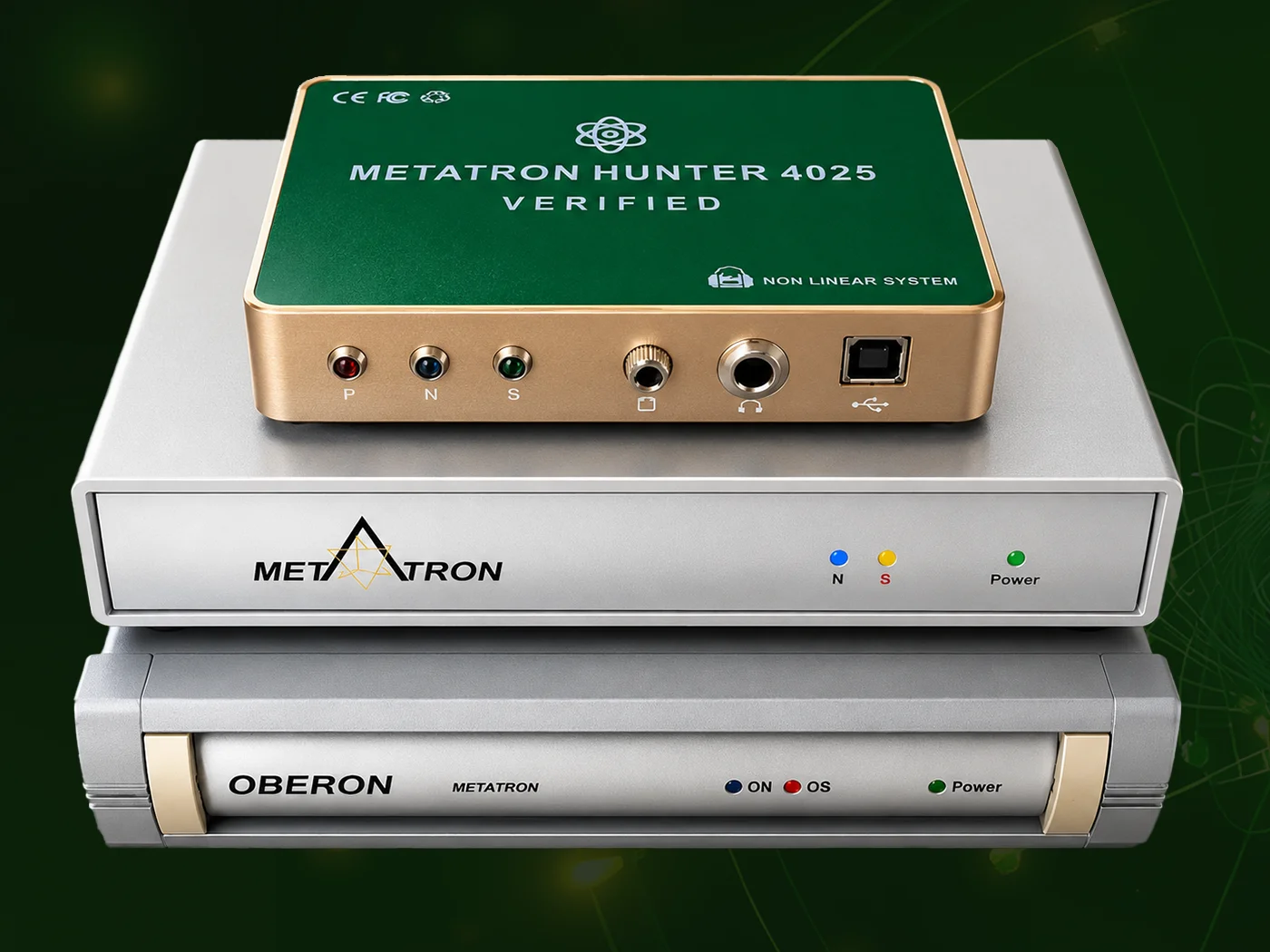
Bioresonance Explained: How It Works, the Evidence, and How to Choose a Device
A quick word on why you will see disclaimers throughout this guide.
We include them for two reasons. UK advertising and consumer rules require us to be accurate and not to overstate what bioresonance can do, and, just as importantly, we genuinely do not want to mislead anyone. We would far rather you understand exactly what this technology is and is not, and buy with clear eyes, than be disappointed later. Honesty is part of how we do business, so the caveats you see here are deliberate, not boilerpl
What this bioresonance guide covers
What is bioresonance?
Bioresonance is a complementary and alternative approach that uses electronic devices to detect and return low-frequency electromagnetic signals associated with the body.
The word itself is a clue: “bio” for living, and “resonance” from physics, the effect where one object vibrating at a particular frequency causes another to vibrate in sympathy.
Proponents extend that analogy to the body, suggesting that cells and tissues are associated with faint electromagnetic activity that a device can read and work with.
That is the concept as its supporters describe it. It is important to be equally clear about the other half of the picture: mainstream science does not accept that these devices can read meaningful health information from the body, and there is no robust evidence that they can.
Although renown scientists have explored bioresonance (including, Einstein, Tesla, Rife to name a few), there has been little if any research or studies from official or medically recognised authorities.
Understanding both halves is what lets you make an informed decision, which is the whole point of this guide.
The idea behind it, and how the devices work
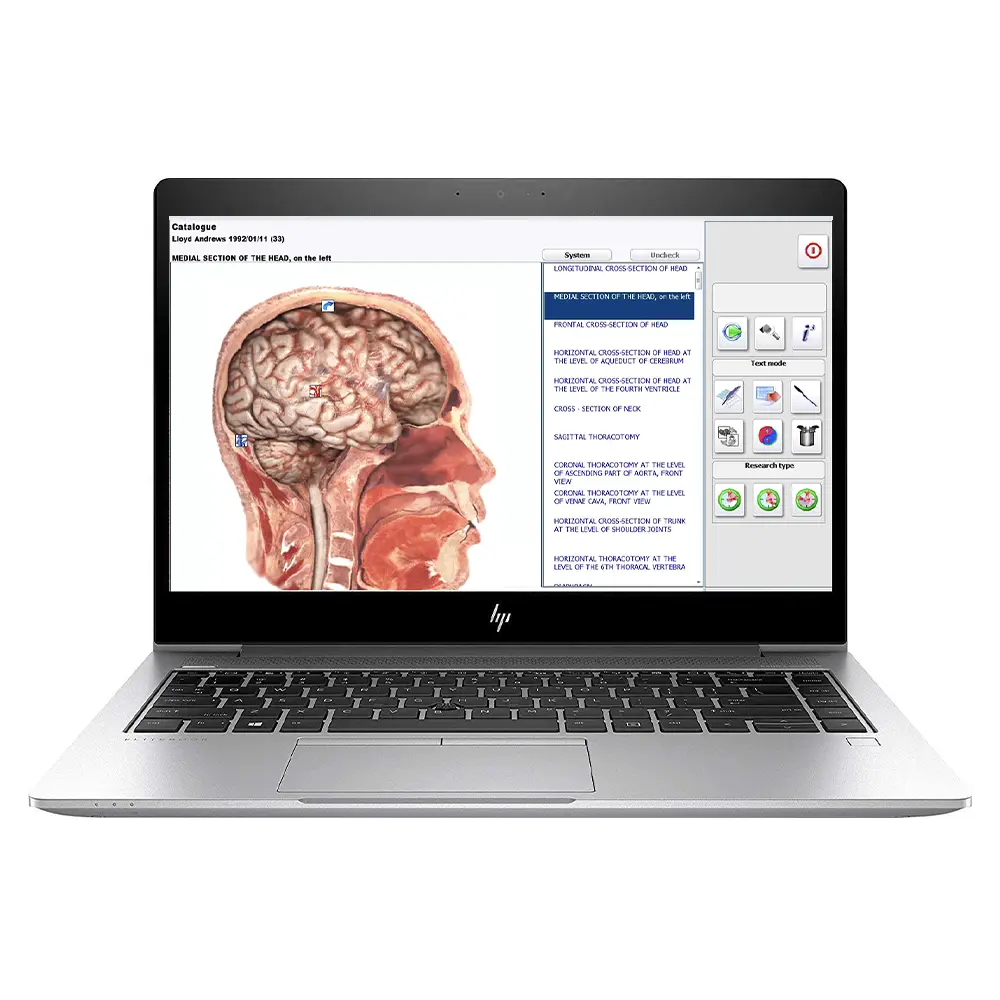
In practical terms, a modern bioresonance device connects to a computer, uses a sensor or headset worn by the person, and runs software that presents graphs, colour-coded models and comparisons on screen.
Different systems work differently: some emit fixed frequencies, some pass signals through skin electrodes or a mat, and the non-linear scanning (NLS) systems, which include the Metatron Hunter Verified, use a headset and software to display visual output.
What the software is doing under the bonnet is comparing signals against stored reference patterns and drawing pictures from the result.
It is genuinely clever engineering as a piece of software.
What it is not is a validated measurement of anyone’s health, and no honest account of how these devices work should imply otherwise.
A short history: Rife, Voll, Morell and Nesterov
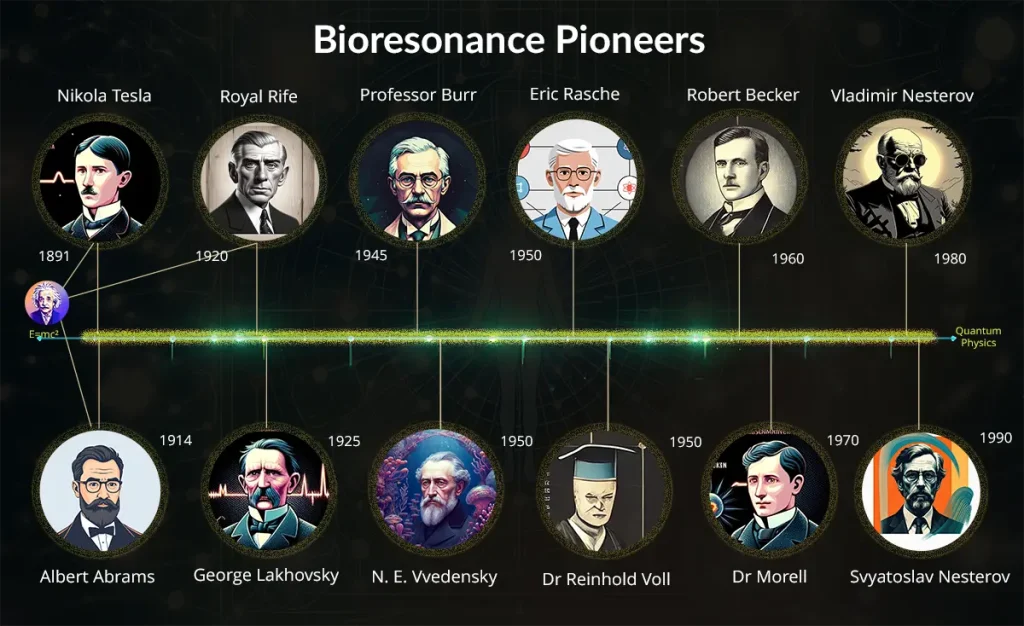
The story is more interesting than the marketing usually lets on.
In the 1920s, the American inventor Royal Rife built a device intended to affect pathogens using electromagnetic frequencies.
His work was dismissed by the medical establishment and became a lasting point of controversy.
In the 1950s, the German doctor Reinhold Voll developed a method of testing acupuncture points electrically.
In 1977, Franz Morell and Erich Rasche developed the MoRa approach, which introduced the idea of working with the body’s own signals rather than external ones.
From the 1990s, Russian developers associated with the Institute of Practical Psychophysics, including Vladimir Nesterov, created the non-linear scanning systems known as Oberon and Metatron, from which the Hunter 4025 descends.
It is a genuine thread of innovation and persistence. It is also, to be candid, a history of ideas that have never crossed into accepted medical science, which is exactly why the evidence section below matters.
The main types of bioresonance device
These are often lumped together, but they are meaningfully different, and knowing the difference marks you out as an informed buyer:
- Rife-type devices, which emit set frequencies.
- EAV, MoRa and BICOM-type systems, used in complementary practice, which work with the body’s own signals through skin contact or a mat.
- NLS scanners such as the Oberon and the Metatron Hunter family, which use a headset and software to present visual output on a computer.
This guide focuses on the NLS type, because that is what the Metatron Hunter 4025 is.
Where the Metatron Hunter 4025 fits
The Metatron Hunter 4025 is a modern NLS device.
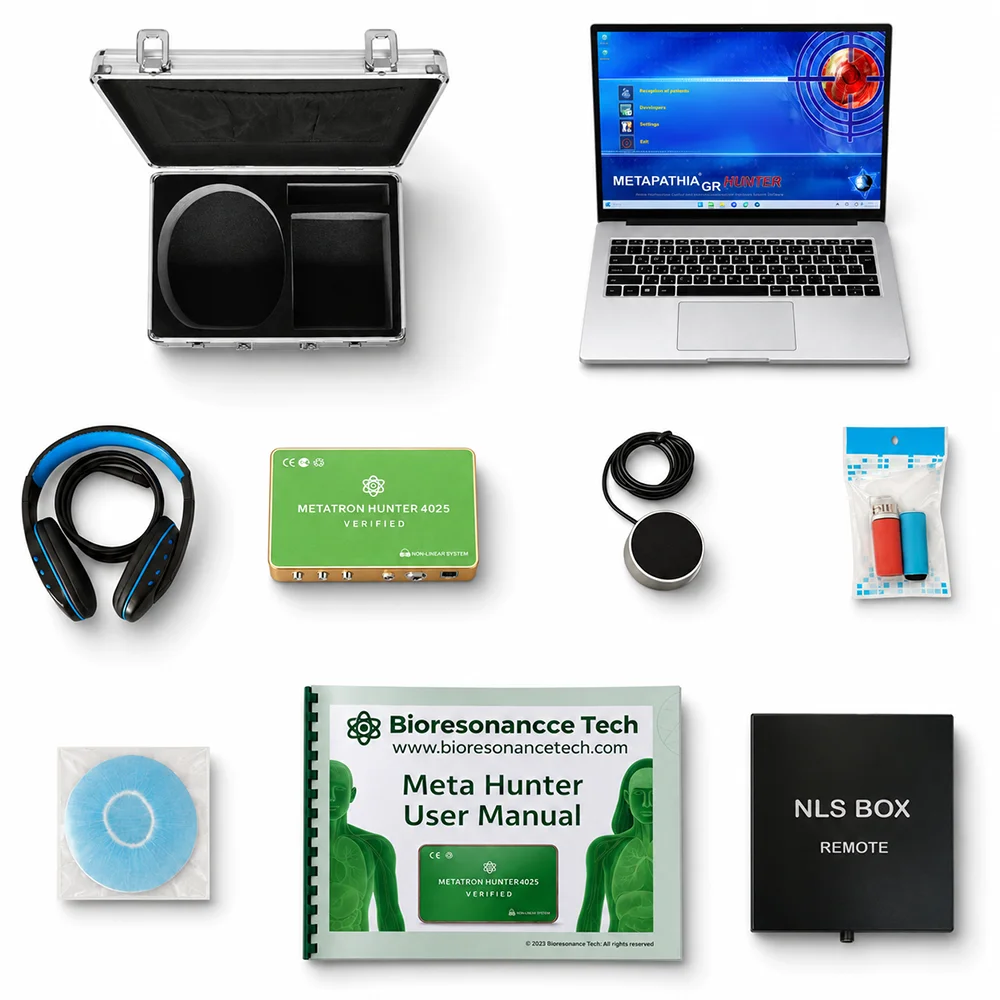
It runs the Metapathia GR Hunter software on a Windows PC, paired with a bio-inductor headset, and presents its output on screen.
Within the world of NLS equipment it is popular because it is comparatively affordable and works with current software, where older Oberon units have not been updated for years.
It is a piece of specialist equipment used within complementary practice, research and education.
To be clear, and we will keep being clear on this, it is not a diagnostic instrument, and the images and values it shows have not been proven to correspond to any real physiological or disease state.
What these devices can and cannot tell you
Here is the honest bottom line that most sellers skip. A bioresonance device produces on-screen output. What it does not do is give you validated information about health.
Because the output is not a validated health measure, it should never be used to reach a diagnosis, to decide on or change any treatment, or to make any decision about a person’s health.
If anyone tells you a bioresonance device can detect, diagnose or treat conditions, that claim is not supported by evidence and, in UK advertising, is not permitted.
Knowing this protects you, both as a buyer and as anyone who might use the device with others.
The evidence, honestly
This is the section that separates an authority from a sales pitch, so we will not soften it.
A small number of studies have reported effects in specific areas.
The most cited is a 2014 pilot study on bioresonance as a support in smoking cessation, and there are small studies in mood and pain. These are limited, often small, sometimes industry-linked, and not confirmed by large, independent trials.
The question why? have there not been any large independent trials begs to be asked.
Set against that, traditional major health bodies and reviews find no sound scientific evidence that bioresonance can diagnose or treat disease, and the UK Advertising Standards Authority has ruled that efficacy claims for bioresonance therapy are not supported by evidence.
Regulators in both the UK and US have treated advertising of bioresonance as an effective treatment as misleading. The responsible summary is simple: bioresonance is unproven, any strong health claim about it should be treated with caution no matter who makes it, and it must never be used in place of medical care.
Where bioresonance fits in modern life
So where does that leave a device like the Hunter 4025? Interest in non-invasive, drug-free wellness technology has grown steadily, and bioresonance sits within that broader curiosity.
The people who get value from these devices are, honestly, those who go in with the right expectations: complementary and alternative practitioners who already work in this space, researchers and educators, and private enthusiasts who want to explore the technology and the software hands-on rather than read about it.
Used that way, as a tool for exploration and learning, it has a genuine place.
What it is not is a health gadget that assesses your body or replaces a check-up.
Approached as the former, it can be a rewarding piece of kit to own and learn.
Approached as the latter, it will disappoint, and could do harm by displacing proper care. That distinction is the single most useful thing to carry away from this guide.
How to choose a genuine device
If, knowing all of the above, you still want to explore bioresonance, the most practical problem is authenticity.
Finding experienced, reliable bioresonance practitioners can be difficult and the market is full of low-cost Hunter units that have never been checked, and many produce inconsistent output, so the same scan run twice can return different or even contradictory results.
That is a hardware and software quality problem, separate from the question of whether the method itself is validated, and it is where buyers most often get burned.
A unit sold as “Verified” should mean it has been tested before sale to produce output consistent with a reference unit, in this case the original Russian Oberon system, and to repeat that output reliably.
That is a statement about the consistency and repeatability of the equipment, not a claim about clinical accuracy.
When comparing sellers, look for:
- A clear, evidenced explanation of how each unit is checked or benchmarked.
- A genuine warranty with accessible terms.
- Setup help, training and responsive support, ideally UK-based.
- A straightforward returns policy.
- Honest, claim-free descriptions. A seller making sweeping health claims is a warning sign, not a reassurance.
That last point matters most. The more a seller promises about your health, the less you should trust them.
Bioresonance FAQs: your questions answered
- What is bioresonance in simple terms?
- Does bioresonance actually work?
- Is bioresonance safe, and are there side effects?
- What does a bioresonance device actually do?
- Is bioresonance a medical device, and is it regulated?
- What is NLS, and how does the Metatron Hunter 4025 work?
- Can I use a bioresonance device at home, and do I need training?
- How do I tell a genuine Verified device from a cheap copy?
- How much do bioresonance machines cost?
- Is bioresonance a scam?
What is bioresonance in simple terms?
Bioresonance is a complementary and alternative approach in which a device reads and returns faint electromagnetic signals associated with the body, and software displays the result on a computer.
It is best understood as a tool used within complementary practice and personal exploration, not as a medical test. Its output is not a validated indicator of health.
Does bioresonance actually work?
There is no robust scientific evidence that bioresonance can diagnose or treat disease.
A few small studies report effects in specific areas such as smoking cessation, but these are limited and not confirmed at scale, and the UK Advertising Standards Authority has ruled that efficacy claims for bioresonance are not supported by evidence.
Treat it as unproven, and never use it in place of medical care.
Is bioresonance safe, and are there side effects?
As equipment, bioresonance is non-invasive and low-power, with no needles and no ionising radiation, and studies have generally reported no serious side effects.
The main risk is indirect: relying on it instead of seeking proper medical care. Keep your GP informed, and see a qualified healthcare professional for any health concern.
What does a bioresonance device actually do?
It runs software that compares signals against stored reference patterns and presents graphs and colour-coded models on screen.
That is the extent of what can be said accurately. It does not detect, diagnose or treat conditions, and its output is not a validated measure of health.
Is bioresonance a medical device, and is it regulated?
No. Bioresonance devices are not medical devices, are not intended to diagnose or treat any condition, and are not regulated as medical devices.
Any CE marking relates to general product-safety directives, not to medical or diagnostic performance.
What is NLS, and how does the Metatron Hunter 4025 work?
NLS stands for non-linear scanning, the family of non-invasive bioresonance systems that use a headset and software to present visual output.The Metatron Hunter 4025 is a modern NLS device that runs the Metapathia GR Hunter software on a Windows PC.
It displays graphs and models on screen; those displays are not validated health information.
Can I use a bioresonance device at home, and do I need training?
No medical qualification is needed to operate the equipment, which runs as Windows software paired with a headset, and an increasing number of home users and practitioners use them.A good supplier provides setup help and training.
Operating the device is separate from interpreting its output, which is not a validated way to assess health.
How do I tell a genuine Verified device from a cheap copy?
A genuine Verified unit has been tested before sale to produce output consistent with a reference Oberon system and to repeat it reliably, whereas many cheap un-benchmarked units behave inconsistently and can give different results from one scan to the next.
Ask the seller exactly how each unit is checked, and look for a real warranty, training, support and returns.
This is about the consistency of the equipment, not clinical accuracy.
How much do bioresonance machines cost?
Prices vary widely, from a few hundred pounds for basic or grey-market units to several thousand for benchmarked, fully supported systems.
The lowest prices usually reflect unchecked units with no support or warranty.
Weigh the total package, warranty, setup, training and returns, not just the headline price.
See our product pages for current pricing on the Verified system.
Is bioresonance a scam?
The honest answer has two parts. The health claims often made for bioresonance are not supported by evidence, and advertising it as an effective treatment has been ruled misleading, so be cautious of anyone promising it diagnoses or cures anything.
At the same time, genuine equipment and honest sellers do exist. The way to protect yourself is to expect exploration rather than medical results, and to buy from a transparent seller who makes no health claims, rather than one who promises the world.
This guide is informational only and is not medical advice. Bioresonance is not a validated medical method, is not a medical device, and must not be used to diagnose or treat any condition or to replace professional medical care. For any symptom or health concern, seek advice from a qualified healthcare professional without delay.
If you have any questions regarding bioresonance and how it works, use the chat or contact us, we’d be happy to help.